
Tag: Greater Victoria

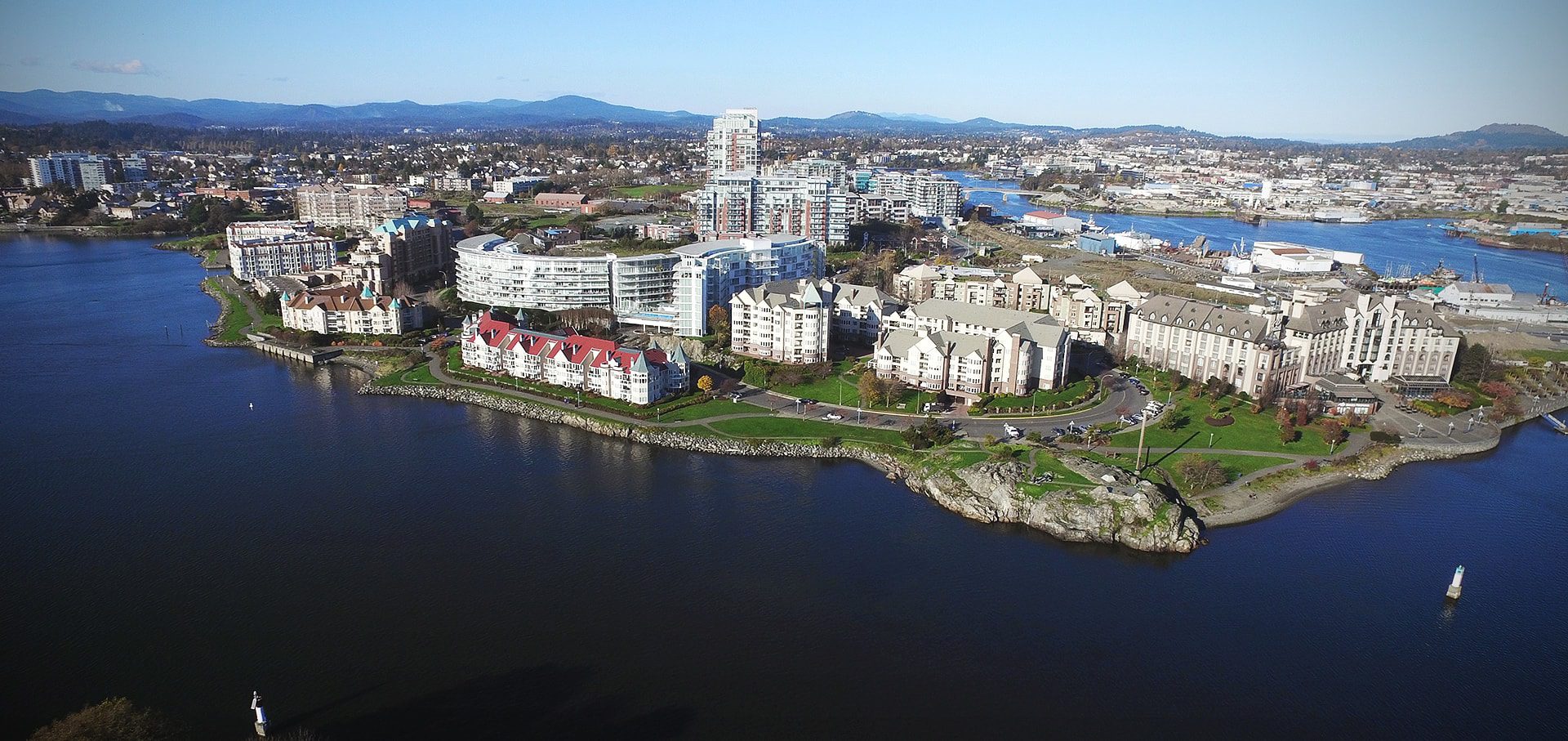
View of Victoria’s waterfront with cloudy skies and urban buildings in the background.

BC Real Estate: The Survey Myth Debunked

My lawyer said I have title insurance, so I don’t need a survey.” Sound familiar?

It sounds like a great way to save money when buying a home. But there is a major misunderstanding happening in the BC real estate market. While title insurance is a valuable tool, it is not a replacement for a Land Survey.

Here is the truth about how to protect your biggest investment.

Have you heard of the BC Assurance Fund?

Most people don’t realize that in British Columbia, we have something called the Assurance Fund. Because BC uses the Torrens Land Title System, the government actually guarantees that the person named on the title is the true owner.

  • How it helps you: If there is a mistake in the government registry or certain types of fraud, the Fund can compensate you.
  • The Difference: In the United States, title insurance is mandatory because they don’t have this government guarantee. In BC, title insurance is an “extra” layer, not the foundation.

Insurance pays for problems; surveys prevent them

Think of it like this: Title Insurance is like a health insurance policy. It pays you money if you get “sick” (like finding out your garage is on city land).

A Surveyor’s Certificate is like eating well and exercising. It prevents the “sickness” from happening in the first place. A survey shows you exactly where your property lines are before you sign the papers.

Why lenders in Victoria still ask for surveys

If you are getting a mortgage on Vancouver Island or anywhere in BC, your bank might insist on a Building Location Certificate. Why? Because the bank wants to be 100% sure that the house they are lending you money for is actually located entirely on the land you are buying.

They want to see:

  • That the house isn’t crossing over the neighbor’s line.
  • That no one else has a right to use your land (called an easement).
  • That the building follows local laws about how far it must sit from the street.

It makes sense when you think of it from the bank’s perspective. Would you lend out hundreds of thousands of dollars without first checking that it won’t backfire? The Building Location Certificate is the proof banks and mortgage companies look for.

When title insurance isn’t enough

Title insurance might cover the legal costs if a neighbor sues you over a fence, but it won’t help you if you plan to:

  1. Build a new fence or deck.
  2. Add an extension to your home.
  3. Know exactly where your yard ends.

To do any of those things, you need to know where the physical boundaries are located on the ground. You can learn more about our professional land surveying services here.

Frequently Asked Questions

Is a survey required to buy a house in BC?

Technically, no. There is no provincial law requiring a survey for every sale. However, lenders often require one as a condition of your mortgage to ensure the asset they are financing actually fits within the legal boundaries.

Why do lenders in Victoria ask for survey certificates?

Victoria has many historic lots and unique property lines. Lenders want a Building Location Certificate to verify that the house doesn’t encroach on municipal land, complies with local setbacks, and matches the legal title description.

Does Title Insurance replace a survey?

No. Title insurance is a financial safety net that pays you if a problem is discovered later. A survey is a physical map that prevents you from buying into a problem in the first place. If you plan to build a fence or addition, title insurance cannot tell you where to put it.

BC Assurance Fund vs. Title Insurance: Which is better?

They serve different roles. The Assurance Fund is a provincial guarantee that you are the owner of the land. Title Insurance is a private policy that covers “off-title” issues like unpermitted renovations or tax liens. Most lawyers recommend title insurance because it pays out faster than the provincial fund.

Does title insurance cover me if I build a fence in the wrong place?

No. Title insurance generally only covers issues that existed at the time of purchase. If you build a new structure in the wrong spot, the insurance will not cover the cost of moving it. You need a survey to build with confidence.

Can I just use a phone app or Google Maps to find my property lines?

Definitely not. While these apps are helpful for a general idea, they can be off by several meters. Only a British Columbia Land Surveyor (BCLS) has the expertise and legal authority to determine exact boundaries.

What is an “encroachment” and why should I care?

An encroachment is when a structure—like a shed, driveway, or roof—crosses over the property line onto a neighbor’s land. Or from a neighbour on to your land. It can lead to legal battles and make it very difficult to sell your home in the future.

If my neighbor has a survey, can I just use theirs?

You can look at it, but it is risky to rely on it. A survey is a professional opinion for a specific client at a specific time. If the neighbor added a wall or shed after that survey was done, the information is outdated and does not protect you legally.

Why is a “Building Location Certificate” different from a “Boundary Stakeout”?

A Building Location Certificate is a paper map used for building permits and mortgages to show where buildings sit on a lot. A Boundary Stakeout involves a surveyor placing physical marks or stakes in the ground so you know exactly where to build.

Does a Land Survey ever expire?

A survey doesn’t “expire,” but it is a snapshot of the property on a specific day. If any new structures, fences, or retaining walls have been built since the survey was done, the document is considered outdated and may not be accepted by lenders or municipalities.

Can I find my own property pins to save money?

You can try to find them with a metal detector, but you should never rely on them for construction. Pins can be moved by previous owners, utility workers, or shifting soil. Sometimes they are placed at an offset to the actual corner. A surveyor verifies that the pins are in their original, legal positions.

What should I do if my neighbor disputes my property line in BC?

In BC real estate, the first step to resolve a boundary dispute is to hire a BC Land Surveyor. We act as impartial experts to find the best evidence of the original boundary, which can help you avoid a costly and stressful court case.

Why is a survey important for “unorganized” or rural areas in BC?

In rural areas, property lines are often longer and less obvious than in the city. Without a survey, you might accidentally build a cabin or road on Crown land or a neighbor’s property, which can lead to expensive fines or the forced removal of the structures.


Ready to protect your property? Don’t rely on a “maybe.” Get the facts before you buy. Contact the experts at Polaris Land Surveying today to ensure your boundaries are clear.
Sources for further reading:
Skyline view

Surveying for BC’s New Small-Scale Multi-Unit Housing (SSMU) Legislation: Navigating the Challenges of Bill 44

British Columbia is currently undergoing a massive transformation in land use with the introduction of Bill 44. This legislation, focused on small-scale multi-unit housing, aims to address the housing crisis by allowing more density on lots traditionally reserved for single-family homes. It sounds like a good idea, right?

However, as the public debates suggest, this shift has created significant friction ranging from concerns about neighbourhood “monstrosities” to confusion over restrictive local bylaws.
At Polaris Land Surveying, we aren’t just boundary experts; we are problem solvers. We understand these pain points and provide the high-quality land surveying expertise necessary to turn legislative complexity into a successful development project.

Here is how a professional survey addresses the biggest concerns surrounding Bill 44.

1. Addressing Neighbourhood Character and “Monstrosities”

One of the loudest complaints regarding the new housing rules is the fear that multi-unit builds will become neighbourhood “monstrosities” that ignore the local aesthetic. Residents are afraid that the neighbourhoods they grew up in and know like the back of their hand will turn into something unrecognizable. Polaris helps bridge this gap through our experience working with local government.

By conducting a detailed site survey, we identify the exact buildable area of your property, including height restrictions and zoning setbacks. The site survey is the foundation for your design and the permitting process. Identifying the buildable area and physical constraints of a site ensures that your project is not only legal but respects the physical characteristics of the neighbourhood. This helps new builds feel like an “evolution of housing” rather than an eyesore because they fit exactly where they belong.

2. Breaking Through the “Permit Wall” of Local Bylaws

Even with provincial mandates, many BC communities still have restrictive local bylaws that can stall a project. Homeowners often hit a “permit wall” when they realize their plans don’t align with specific municipal requirements in areas like Sidney or Oak Bay. Over in Coquitlam, a homeowner experienced several struggles with various bylaw requirements, causing much frustration and confusion.

Our team specializes in navigating these local hurdles so you don’t have to. If you are considering a small-scale multi-unit housing development or just adding a suite, we provide the technical data and guidance required to move your application through city hall without costly delays. This is part of what we do every day.

3. Clarifying Strata Confusion and Rental Restrictions

There is significant confusion regarding whether existing stratas can maintain single-family restrictions or how Bill 44 overrides older bylaws. Additionally, the removal of rental restriction bylaws has caused friction for some owners.

Polaris addresses this through intensive research at the Land Title and Survey Authority of BC (LTSA). We provide clarity on registered easements, rights-of-way, and legal boundaries, ensuring you have a clear picture of your property rights before you invest.

4. Ensuring Your Investment is Effective

Many skeptics wonder if these changes will truly “fix the housing crisis“. From a homeowner’s perspective, the best way to ensure effectiveness is to start with the right data. Garden suite survey requirements in BC (PDF download) are strict; assumptions or errors in property line location can lead to a total project shutdown.

By hiring a BCLS (British Columbia Land Surveyor) early, you ensure that every square foot of your property is utilized efficiently and legally, protecting your financial investment. All BC land surveyors from Polaris Land Surveying are registered with the Association of BC Land Surveyors.

Why a Survey is Your First Step Under Bill 44

If you are considering a multi-unit project on Vancouver Island or the Gulf Islands, ensure you have addressed these essentials:

  • Determine Buildable Area: Use a professional survey to see exactly how many units your lot can legally support.
  • Verify Local Setbacks: Don’t get stuck at city hall; ensure your plans meet specific Saanich or Oak Bay building requirements.
  • Identify Encroachments: Confirm that your new small-scale multi-unit housing won’t cross over onto a neighbour’s land, preventing future boundary disputes.
  • LTSA Research: Map out all registered easements or utility rights-of-way that could restrict construction.
  • Professional BCLS Seal: Ensure all documents are certified by a licensed BC Land Surveyor to meet lender and municipal standards.
  • Check out the BC Government’s FAQ on Bill 44 (PDF link)

Navigating the new housing rules doesn’t have to be a headache. Whether you are in Victoria, the Cowichan Valley, or Powell River, our team is ready to help. Contact Polaris Land Surveying today to get your project started on the right side of the property line.

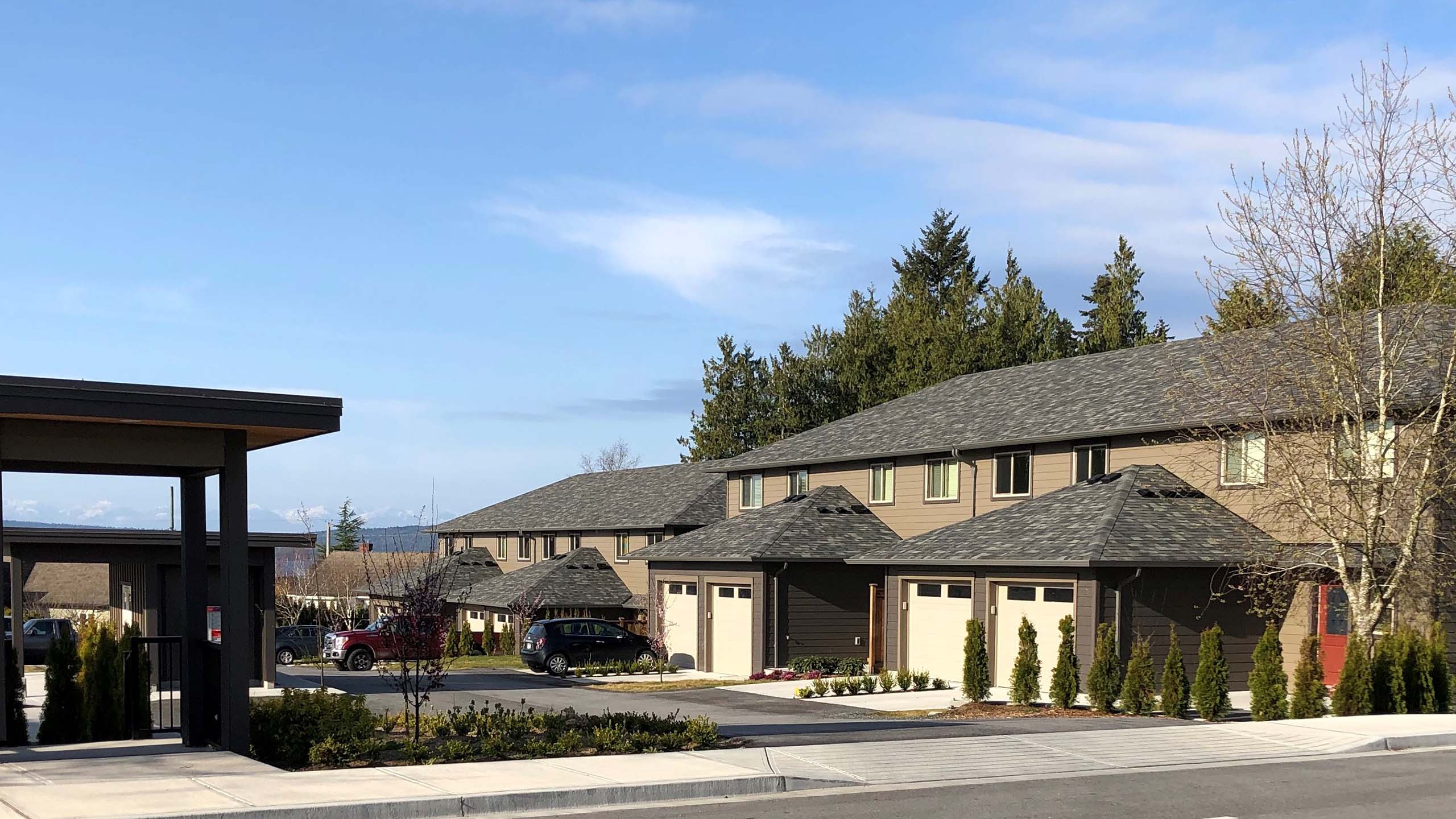
A residential area with townhouses

5 Things to Look for in a Surveyor’s Certificate When Buying a Home on Vancouver Island

Buying a home in Victoria, the Cowichan Valley, or anywhere on Vancouver Island is a major commitment that requires thorough due diligence to protect your investment. A BC Land Surveyor’s Building Location Certificate, also known as a BLC or Location Certificate, is a critical document used by homebuyers and real estate agents to understand the physical and legal realities of a property. At Polaris Land Surveying, we act as your local “spatial problem solvers,” helping you navigate everything from building permit requirements to boundary disputes in BC.

To request a quote for a Real Property Report / Surveyor’s Certificate prior to closing on a home purchase, please contact Polaris Land Surveying Inc.

While some buyers assume title insurance is sufficient, understanding the difference between a survey certificate and title insurance in BC is vital. While insurance may cover financial loss, only a certified survey provides the physical certainty of where your boundaries lie.

Here are five essential elements to look for in your surveyor’s certificate.

1. Encroachments and Property Structures

A primary purpose of a residential survey is to identify if any structures, such as fences, sheds, or retaining walls, cross the legal property line. Identifying these early can prevent emotional boundary disputes in BC with neighbours. A location certificate will provide certainty that the structures and improvements are actually contained within the limits of the property being purchased. If the certificate reveals a potential encroachment or you’re planning future additions, see when you need a BCLS for home renovations.

Finding out a neighbor’s shed or fence crosses the line? Here is what to do if a neighbor puts a fence on your property.

2. Local Zoning Setbacks

Each municipality across Vancouver Island has specific bylaws regarding how close a structure can be to the property line. Your certificate will show if the home complies with these, such as Oak Bay renovation setbacks or Saanich building permit survey requirements. This is particularly important for those finding a surveyor for a home addition or a home renovation, as non-compliance can lead to a “permit wall” at city hall.

3. Registered Easements and Rights-of-Way

Properties often have registered easements or rights of way that allow utility companies or neighbors to access portions of the land. A BLC highlights these areas, which we verify through extensive research at the Land Title and Survey Authority of BC (LTSA). Understanding these registered charges is crucial, as they can limit where you are allowed to build or landscape.

4. Natural Boundaries and Terrain

Vancouver Island’s geography, featuring rugged coastlines and creeks, means many properties have “natural boundaries”. These boundaries can shift over time, and an accurate survey is needed to define exactly where your private land ends. Additionally, property survey costs in BC can be affected by this terrain; for example, a one-acre property with a forest and a creek may have different land surveyor fees on Vancouver Island than a flat city lot.

5. Professional BCLS Certification and Date

To be accepted by a municipality or lender, the certificate must be signed and sealed by a qualified BCLS (British Columbia Land Surveyor). It is also important to check the date; with BC’s new Small-Scale Multi-Unit Housing (SSMU) legislation (Bill 44), older surveys may not reflect the potential for new density, such as a garden suite or multiplex. You can verify a surveyor’s credentials through the Association of BC Land Surveyors.

All of the land surveyors at Polaris Land Surveying Inc. are certified BCLS, and we provide the appropriate documentation for each requested service.

——————————————————————————–

Vancouver Island Homebuyer’s Checklist

When reviewing a location certificate for a property anywhere on Vancouver Island, ensure it covers these critical points:

  • Encroachments: Are all structures (fences, decks, sheds) confirmed to be within the property lines?
  • Municipal Compliance: Does the property meet specific local setbacks for areas like Saanich, Oak Bay, or Duncan?
  • Development Potential (Bill 44): Does the survey provide the necessary data to explore Small-Scale Multi-Unit Housing or subdividing?
  • Verified Easements: Are all rights-of-way clearly mapped according to current LTSA records?
  • Recent BCLS Certification: Is the document current and signed by a licensed BC land surveyor?

All of the building location certificates provided by Polaris Land Surveying Inc. cover these criteria, and more, given the parameters of the requested service.

Whether you are purchasing a home in the Alberni Valley or a rural lot in the Gulf Islands, our team is ready to provide the high-quality land surveying services you need. Contact Polaris Land Surveying today to ensure your property boundaries are secure.